

Introduction: Feedback as the Foundation of Sustainability
The sustainability of an educational program is defined by its ability not only to ensure high-quality knowledge but also to adapt to social, economic, and technological changes. In this context, feedback acts not merely as an assessment tool, but as a critical mechanism for continuous improvement, guaranteeing the program’s relevance, effectiveness, and social responsibility.
Communication with Stakeholders
The effective development and maintenance of a sustainable educational program require establishing two-way communication with all stakeholders. This communication helps align academic goals with real labor market demands and societal needs:
- Employers and Industry: Provide indicators of graduate demand, technological trends, and necessary professional skills.
- Students and Graduates: Evaluate the quality of the learning process, its alignment with their expectations, and help identify internal barriers.
- Educational Institutions (Administration and Faculty): Provide feedback on pedagogical soundness, resource allocation, and professional development needs.
- Government and Civil Society Organizations: Inform the program about regulatory requirements and social priorities (e.g., sustainable development, gender equality).
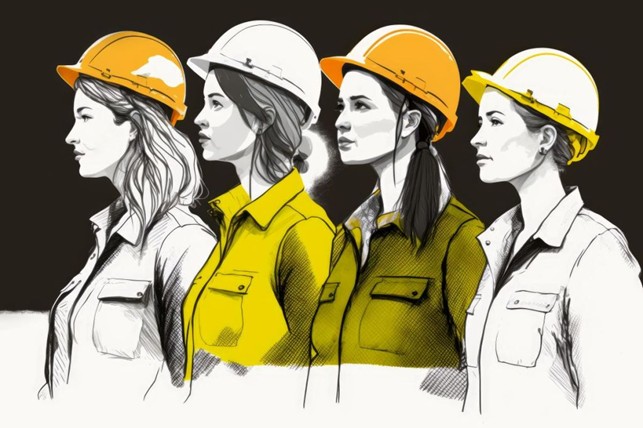
Core Challenge: Engaging Women in Construction Specialties
To achieve true program sustainability, programs must be inclusive. In traditionally “male-dominated” fields such as construction, feedback becomes an essential tool for breaking down gender barriers and stimulating the engagement of women.
- Strategic Feedback from the Labor Market
Employers play a key role in changing gender stereotypes by confirming the industry’s shift in focus from heavy manual labor to intellectual and managerial tasks.
Collection Methods and their Gender Focus:
- Advisory Boards: Mandatory inclusion of women leaders from construction, architecture, or engineering companies. Their participation ensures a female perspective on the necessary competencies and employment culture.
- Competency Surveys: Focus on the demand for skills that are gender-neutral or often stronger among women: BIM (Building Information Modeling), Green Building (LEED/BREEAM), project management, and communication.
- Success Stories: Collecting and integrating success stories from women professionals into educational materials to create positive role models.
- Feedback from Female Students and Faculty
To attract and retain women, it is necessary to actively gather information about internal barriers within the academic environment:
- Identifying Barriers: Conducting anonymous surveys among female students and prospective applicants to identify obstacles (gender bias, lack of appropriate infrastructure, feeling of isolation).
- Environment Adaptation: Using feedback to adjust career guidance materials (creating non-stereotypical content) and the learning environment (ensuring gender sensitivity in practical sessions).
- Faculty Training: Feedback from faculty regarding the need for professional development in gender sensitivity and addressing unconscious biases in teaching and assessment.
The Sustainability Loop: From Analysis to Action
Effective feedback translates into concrete actions, forming a continuous improvement cycle:
- Collection: Actively gathering information from all stakeholder groups (via boards, surveys, job market analysis).
- Analysis: Comparing market needs (what employers demand) with learning outcomes (what graduates can do).
- Adjustment/Correction:
- Content Modernization: Integrating new topics (BIM, Green Building) into curricula.
- Technological Readiness: Updating technical resources and software, which is vital for attracting women through digital skills.
- Culture and Inclusivity: Implementing mentorship programs and professional ethics courses to combat workplace toxicity.
- Graduation: Producing highly qualified, in-demand, and gender-balanced specialists.
- Evaluation: Employers provide positive feedback on new graduates, confirming the effectiveness of the changes implemented.
Conclusion
A sustainable educational program is a dynamic and inclusive program. Feedback from all stakeholders, especially with a strategic focus on engaging underrepresented groups like women in construction, is the key driving force. By using it to modify curriculum content, cultivate an inclusive culture, and confirm the relevance of new skills in the market, educational institutions ensure not only the relevance of their programs but also their social sustainability.
Lutsk National Technical University
This project has been co-funded by the Erasmus+ Programme of the European Union
