
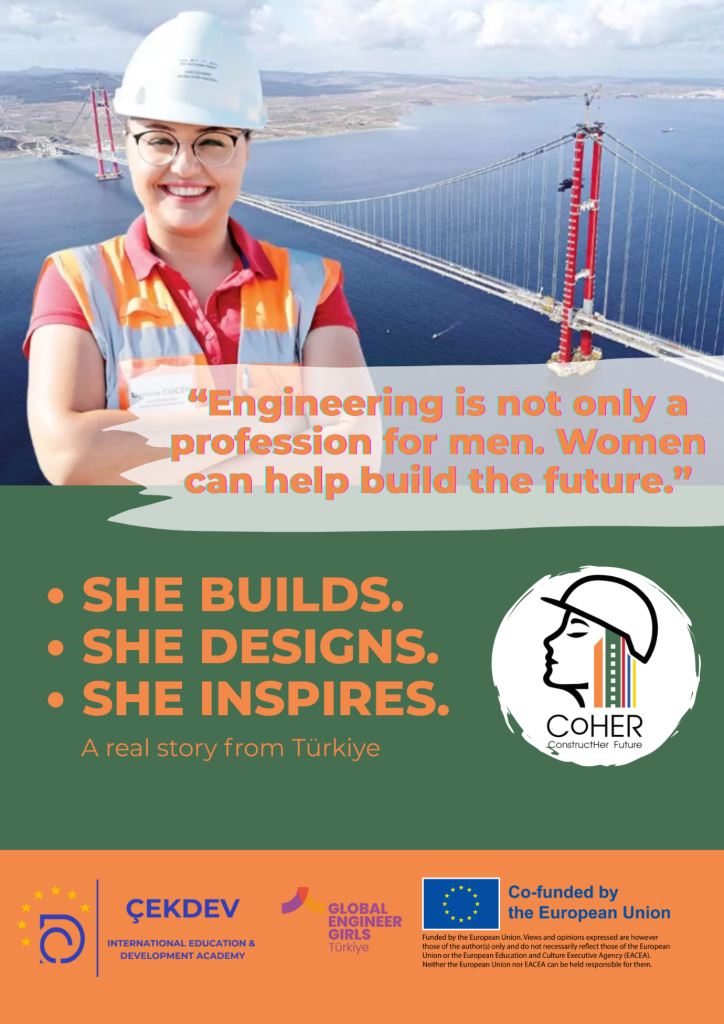
The construction sector in Türkiye plays an important role in the national economy, employing over two million people and representing around 6–7% of national employment, according to the Turkish Statistical Institute (TÜİK, 2023). Despite this importance, the sector remains heavily male-dominated.
Women are still underrepresented in construction-related professions. Studies show that women represent around 27% of graduates in engineering, manufacturing and construction fields in Türkiye, and an even smaller percentage continue into technical construction jobs.
However, inspiring examples are beginning to appear and show that the situation is slowly changing.
Vocational Education Opening New Opportunities
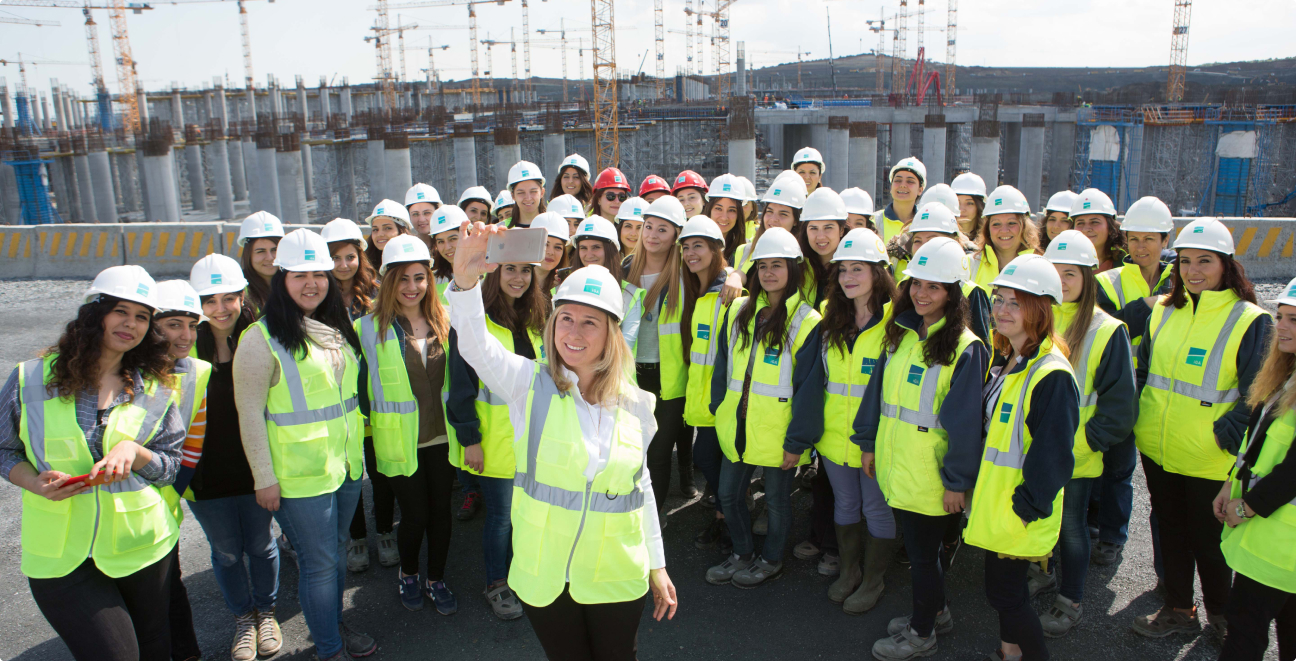
Türkiye has invested significantly in vocational education reforms in recent years. Between 2021 and 2023, the Ministry of National Education (MEB) strengthened cooperation between vocational schools and industry while expanding training opportunities.
One key development was the growth of Vocational Training Centres (Mesleki Eğitim Merkezleri), which combine classroom education with workplace experience.
According to MEB data from 2023, more than 443,000 women were enrolled in vocational training centres across Türkiye. While many female students still choose traditional sectors, interest is gradually increasing in technical fields connected to construction and design.
Vocational programmes now often include areas such as:
- architectural drafting
- computer-aided design (CAD)
- interior design technologies
- building design and modelling
These programmes allow students to combine technical skills with creativity and digital tools, making construction-related careers more accessible to young women.
Role Models and Mentorship
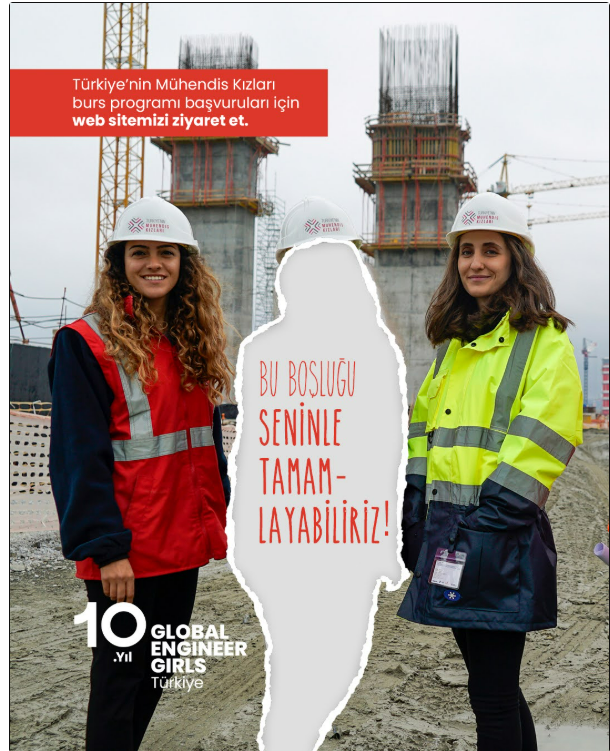
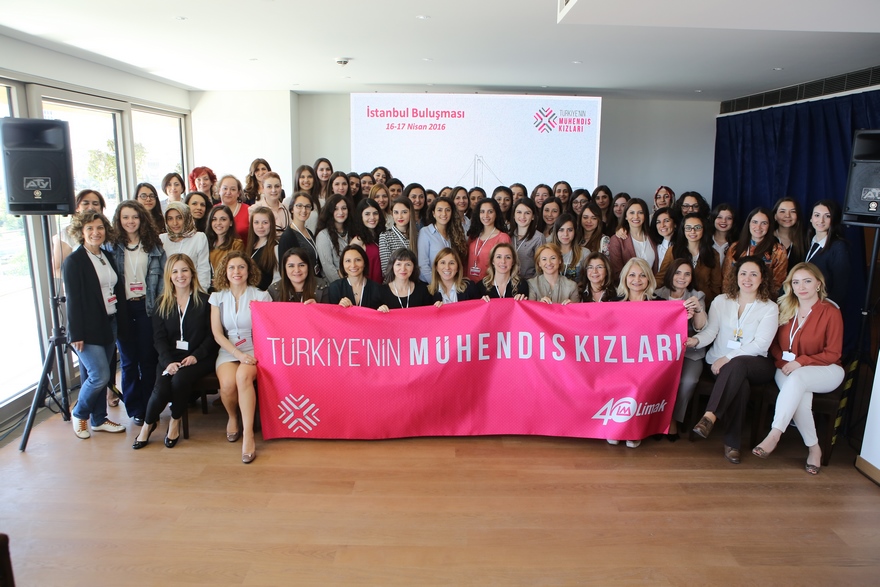
Visibility of female role models also plays an important role. One of the most recognised initiatives supporting women in technical careers is “Engineer Girls of Türkiye” (Türkiye’nin Mühendis Kızları).
The programme was launched in 2015 by the Limak Foundation, in partnership with UNDP Türkiye, to support female students pursuing engineering education.
The initiative has supported more than 1,500 female engineering students through:
- scholarships
- mentorship programmes
- internships with companies
- career development training
Meeting women already working in engineering and construction helps students better understand the wide range of opportunities available in the sector.
A Real Example from Türkiye: Destina Cücen Yenidoğdu
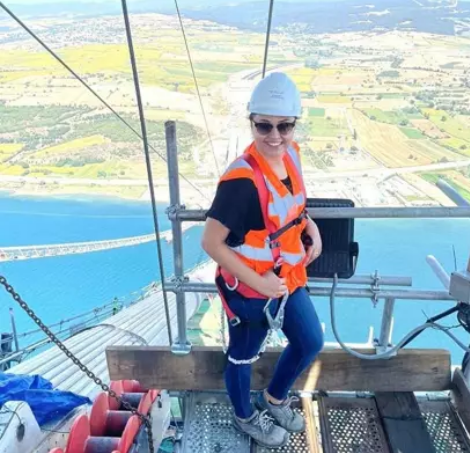
An inspiring example of women entering the construction sector in Türkiye is Destina Cücen Yenidoğdu, a young civil engineer who worked on the construction of the 1915 Çanakkale Bridge.
Completed in 2022, the bridge connects the European and Asian sides of the Dardanelles Strait and has a main span of 2,023 metres, making it the longest suspension bridge span in the world. The project involved around 900 engineers and more than 30,000 workers, making it one of the largest infrastructure projects in Türkiye.
Destina Cücen Yenidoğdu became involved in the project through the Engineer Girls of Türkiye programme, which supports female engineering students with mentorship and professional opportunities.
Speaking about her experience, she emphasised the importance of changing stereotypes about technical professions:
“Engineering is not only a profession for men. Women can also contribute to major infrastructure projects and play an important role in shaping the future.”
She also highlighted how role models can inspire younger generations:
“When young girls see women working in engineering and construction, they begin to believe that they can achieve the same.”
Her participation in the 1915 Çanakkale Bridge project demonstrates how educational initiatives and mentorship programmes can help young women enter sectors traditionally dominated by men.
Skills for the Future
The construction sector is evolving rapidly with new technologies and sustainability goals. Skills such as digital modelling, energy-efficient design, and smart urban planning are becoming increasingly important.
Vocational education programmes in Türkiye are gradually introducing topics such as:
- sustainable construction
- digital design tools
- Building Information Modelling (BIM)
- green building technologies
These developments create new opportunities for female students, especially in areas related to design, planning, and digital construction technologies.
A Light at the End of the Tunnel
Although women are still underrepresented in construction VET in Türkiye, recent initiatives show promising progress. Education reforms, mentorship programmes, and increased awareness about gender equality are slowly helping to reshape the sector.
Each female student entering construction-related education contributes to breaking stereotypes and inspiring future generations.
With continued support from schools, industry partners, and international cooperation projects, the construction sector in Türkiye may become a more inclusive and diverse environment for the next generation of professionals.
What’s Next?
The experience from Türkiye shows that empowering women in construction begins with education, mentorship, and visibility. When female students are introduced to technical skills, supported by role models, and encouraged to explore engineering and construction pathways, they gain the confidence needed to enter traditionally male-dominated sectors.
Initiatives such as vocational education reforms and mentorship programmes like Engineer Girls of Türkiye demonstrate that change is possible. However, continued efforts are needed to expand these opportunities and encourage more girls to consider careers in construction and engineering.
One important step is providing accessible learning opportunities that help learners and educators recognise and address gender stereotypes. For example, the ConstructHer Future project offers a mini-course on combating workplace biases in construction education, designed to raise awareness and promote inclusive training environments.
👉 Explore the mini-course here.
The next step is to strengthen cooperation between vocational schools, universities, industry partners, and international projects, ensuring that more women can access training, mentorship, and employment opportunities in the construction sector.
📩 Stay Connected
Want to learn more about how ConstructHer Future is supporting women in construction education across Europe?
- Join our newsletter
- Follow upcoming project activities
- Discover more inspiring case studies
Together, we can build a construction sector where talent, innovation, and opportunity are open to everyone.
