
Construction isn’t just technical — it’s human. Learn the skills that matter on site.
Construction today is no longer just about technical delivery. During recent CoHER pilot workshops and focus groups in Ireland, students studying construction and project management made one thing very clear: the human side of construction matters.
Inclusion and equality were not discussed as abstract values, but as everyday site realities — affecting safety, communication, confidence, and teamwork.
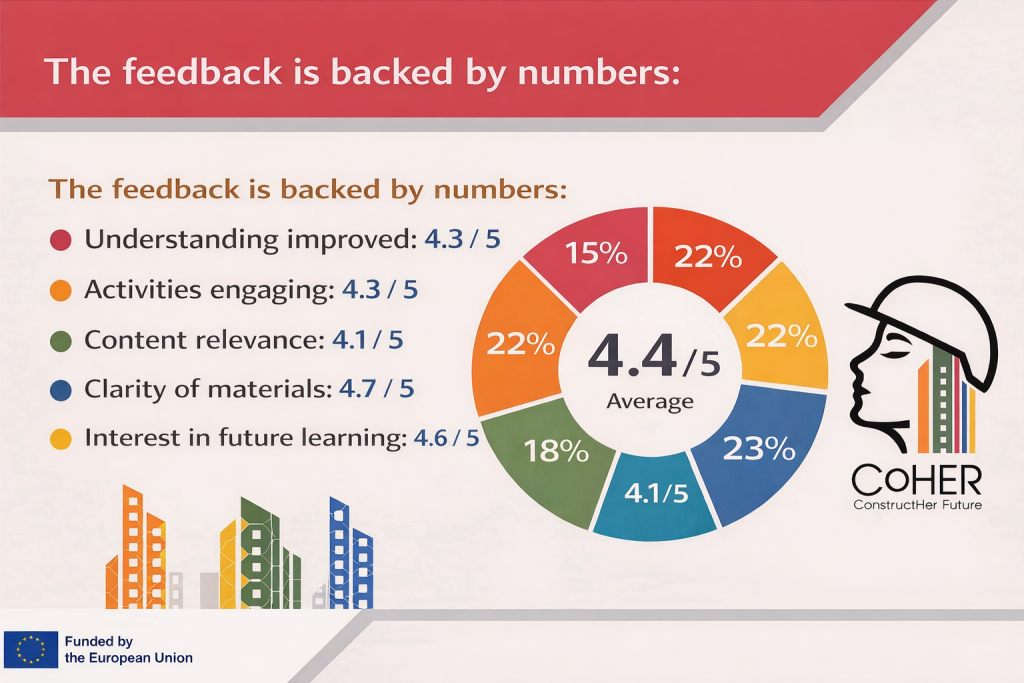
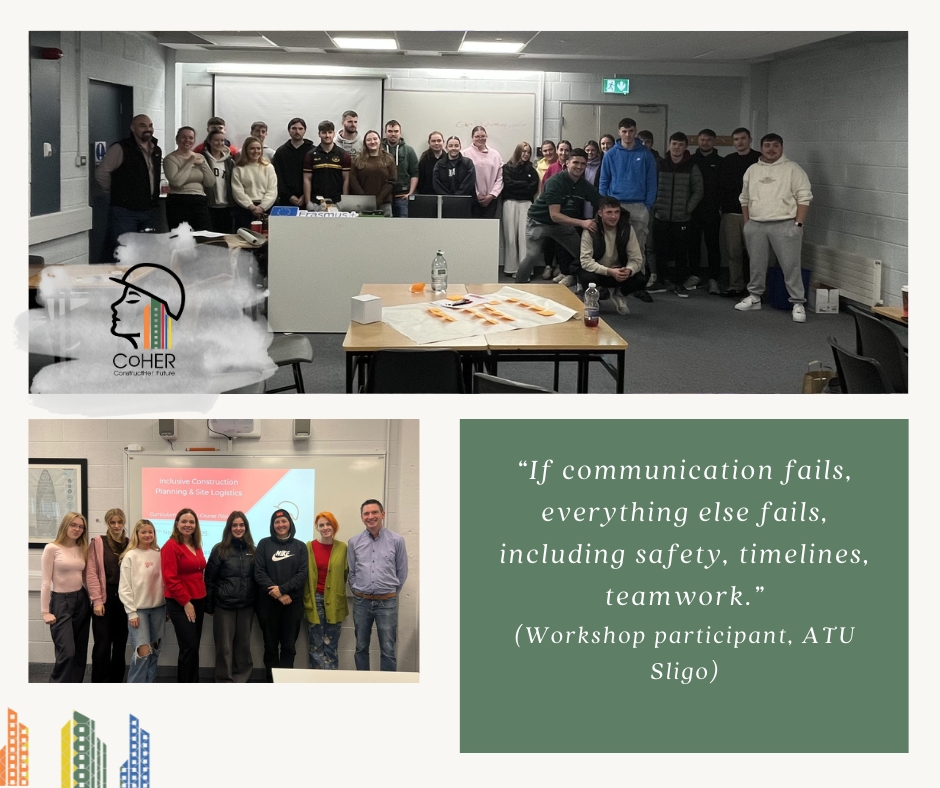
Across both pilot activities, students showed strong engagement and interest, especially when inclusion was explored through real scenarios rather than theory.
As one participant summed it up:
– “Fair doesn’t mean everyone gets the same, it means the site actually works for everyone.”
This highlights a growing gap in traditional construction curricula, where technical skills dominate, but people-centred project management is often underrepresented.
How CoHER Responds, and Why It Matters
The ConstructHer Future (CoHER) project was created to address this gap. Its curriculum modules and mini-courses treat inclusion and equality as core construction competencies, not optional extras.
CoHER learning materials focus on:
- inclusive communication across project phases
- scheduling for diverse teams
- accessible site logistics
- leadership and responsibility through an equality lens
They are built around real-life examples, visual case studies, and practical scenarios – the formats students rated as most useful during pilot testing.
If you’re a student, apprentice, or early-career professional interested in construction, CoHER’s resources are designed to help you prepare for modern sites — where success depends as much on how people work together as on technical expertise.
What Students Expect from Construction Education
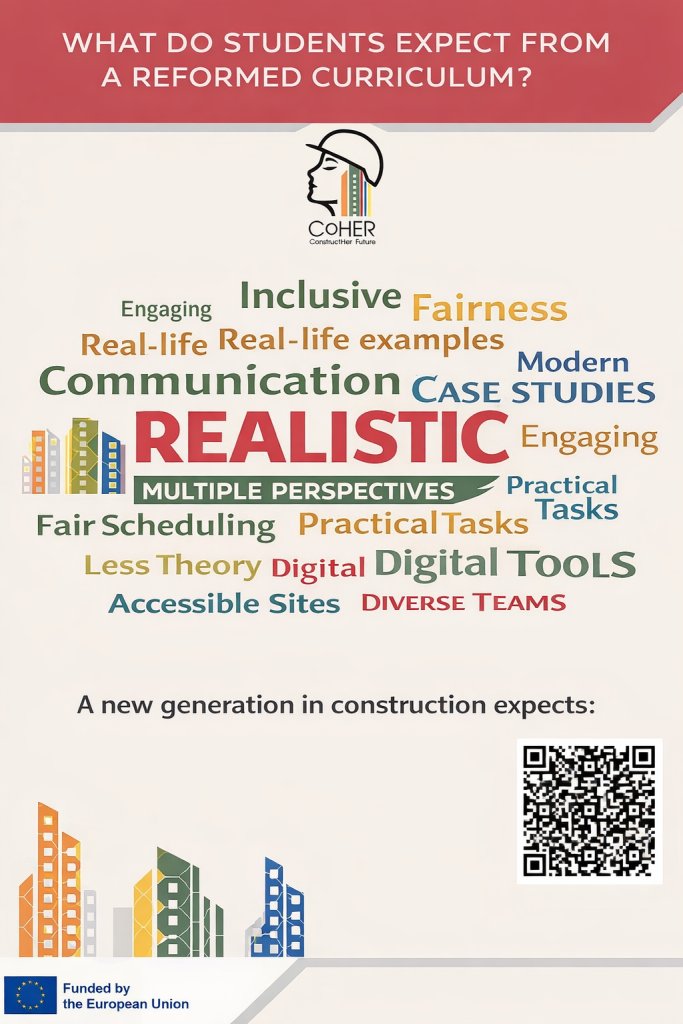
When asked what modern construction education should look like, students consistently highlighted the need for learning that reflects real site conditions and prepares them for managing diverse teams.
They expect education to include:
- Clear and inclusive communication, not assumptions
- Fair (not just equal) scheduling and task allocation
- Accessible site planning and logistics
- More case studies, scenarios, and group discussion
- Less passive theory, more applied learning
