At Lutsk National Technical University (LNTU), we recognize that creating gender equality and inclusive learning environments is essential for shaping the future of vocational education and training (VET). As technical education continues to evolve in response to labour market demands and social change, universities play a key role in ensuring equal opportunities for all learners.
One of the most effective ways to advance gender-inclusive teaching is through professional development networks. These networks bring together educators, trainers, researchers, and industry experts to exchange knowledge, share experiences, and co-create innovative teaching approaches that support inclusive learning environments.
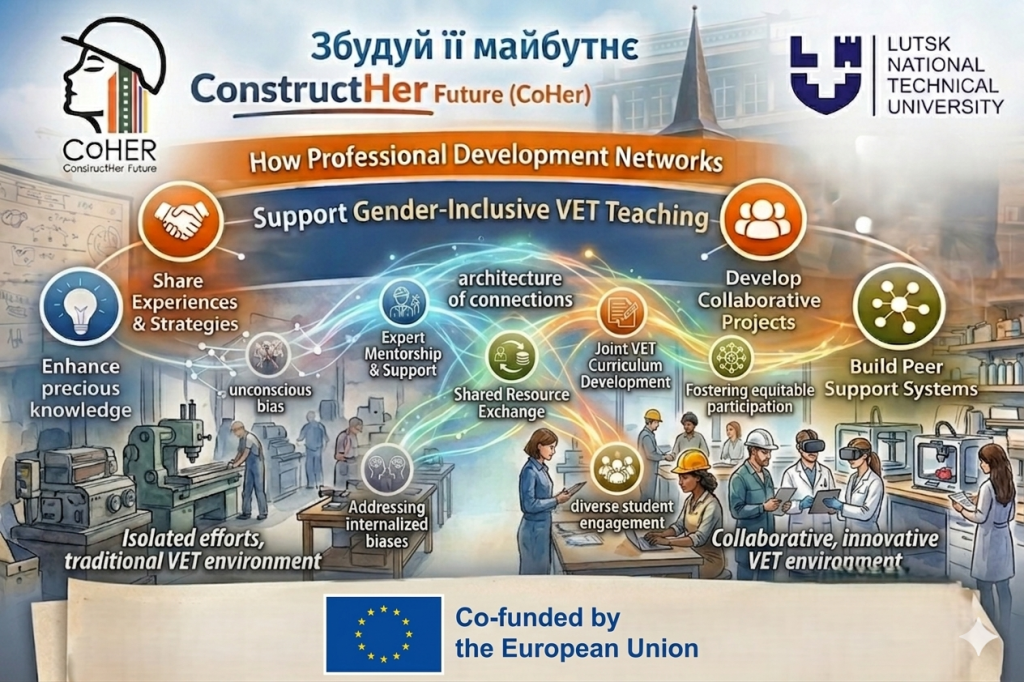
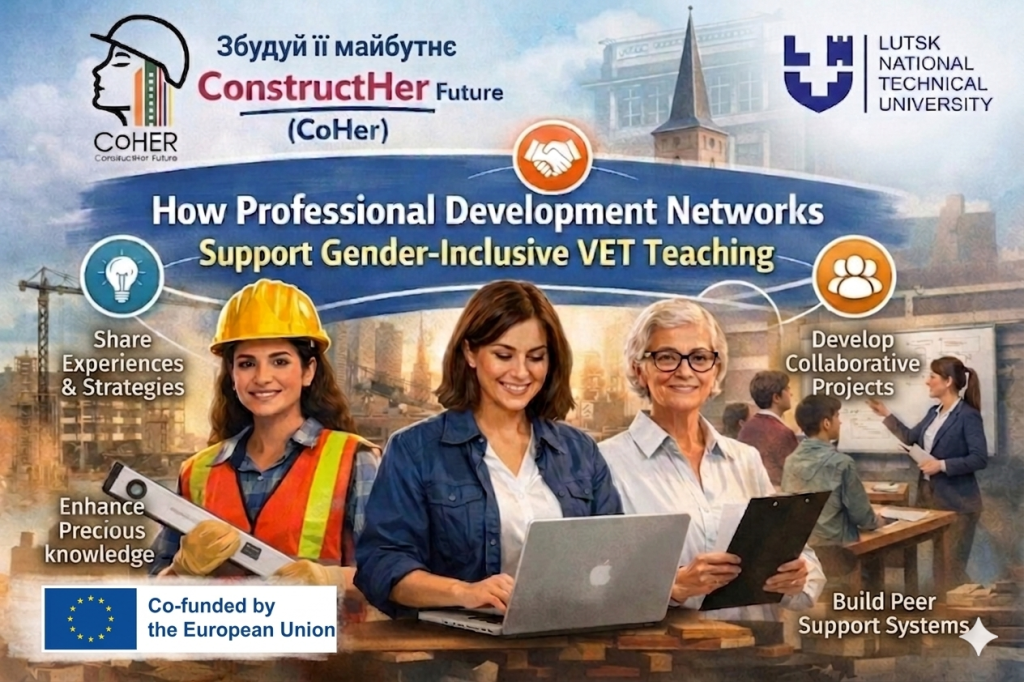
Professional development networks create a collaborative space where VET teachers can:
- enhance their knowledge of gender equality principles and inclusive pedagogy;
- exchange practical tools for addressing gender stereotypes in technical subjects;
- learn from international practices and peer experiences;
- develop collaborative projects that promote equity in vocational classrooms;
- build peer-support systems that sustain long-term improvements in teaching practice.

Importantly, these networks encourage reflection and dialogue among educators. By participating in professional development activities, teachers become more aware of how unconscious bias and traditional role expectations can influence classroom interaction, career guidance, and student motivation. As a result, they gain practical strategies to create supportive environments where all students—regardless of gender—feel confident exploring technical professions.
Another key benefit of a professional development network is its role in fostering institutional change. When teachers collaborate across departments, institutions, and countries, they help introduce inclusive practices not only at the classroom level but also within curricula design, learning materials development, and organisational policies. This contributes to the creation of sustainable institutional environments that support diversity and equal participation in technical education.
Participation in professional development networks also enables the university to exchange expertise with European partners and integrate innovative solutions into its educational programmes.
In essence, professional development networks do more than provide training—they empower educators to become agents of change. By connecting teachers across disciplines, institutions, and countries, these networks help build a more equitable, inclusive, and innovative VET system that supports the professional aspirations of all learners and responds to the challenges of modern society.