
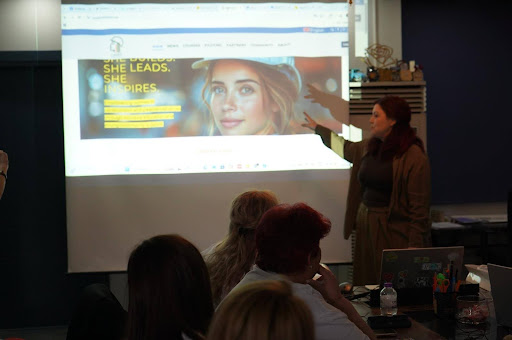
Creating effective learning materials is not only about preparing good content. It is also about listening to the people who use those materials and adapting them according to their needs. In the CoHER project, feedback plays an important role in improving learning resources so they become more practical, inclusive, and useful for learners, educators, and professionals. The idea of “listening and adapting” shows that learning materials become stronger when they are shaped by real experiences and real voices.
CoHER aims to support inclusion, skills development, and participation, especially in sectors where women and underrepresented groups may face barriers. For this reason, its learning materials need to be clear, accessible, motivating, and connected to real-life situations. Feedback from training participants helps the project team understand what works well and what needs improvement. Learners and trainers can identify confusing instructions, difficult concepts, missing examples, or activities that need to be more practical.
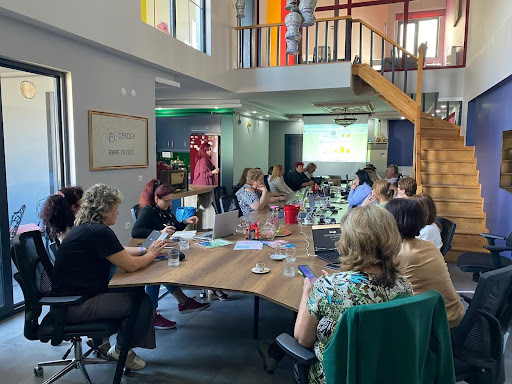
Interactive discussion encouraged participants to reflect on the relevance of the learning materials.
One of the main benefits of feedback is clarity. A topic may seem easy to the writer, but learners may understand it differently. When participants say that a task is unclear, the material can be rewritten with simpler steps or better examples. In this way, feedback helps transform general information into learning tools that are easier to understand and use.
Feedback also makes the materials more practical. CoHER resources should prepare learners for real challenges in education and work. During training, participants can explain whether the examples and activities feel realistic. Their suggestions can help improve case studies, exercises, and workplace scenarios. This makes the learning experience more relevant and meaningful.
Another important benefit is inclusiveness. Inclusive learning materials respect different backgrounds, experiences, and learning styles. Feedback can show whether the language is welcoming, whether examples represent diverse people, and whether the content supports equal participation. By adapting the materials, CoHER can create resources that are more supportive for everyone.
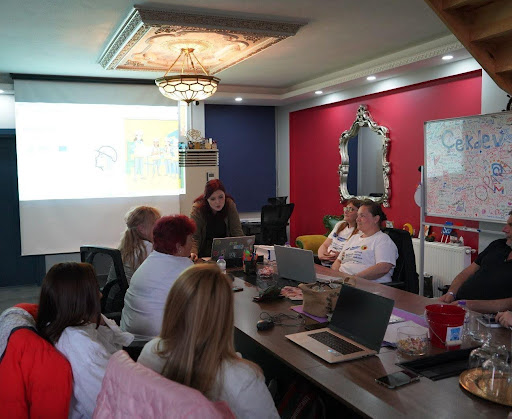
Group discussion supported the development of more inclusive and learner-centered resources.
Feedback is also valuable for trainers. Trainers can explain whether the materials are easy to deliver, whether the activities fit the session time, and whether learners stay engaged. Their experience helps improve both the content and the teaching process. This makes the materials more effective in real training environments.
In conclusion, feedback is essential for improving CoHER learning materials. It helps make them clearer, more practical, more inclusive, and easier to use. By listening to learners and trainers, CoHER creates resources that respond to real needs. By adapting the materials, the project shows that learning is a shared process. Feedback is not only a way to evaluate materials; it is a way to make them better, more meaningful, and more impactful.
Cekdev International Education & Development Academy
